Years ago, I delivered Domino’s pizzas in Muncie, Indiana. I’ve actually delivered pizzas in all kinds of college towns, but being Ball State, Munice was a specific kind of special.
They filmed Celebrity Cop in Muncie, for instance, a show that (thankfully) never aired. I have fifteen deliveries in the back of my car, and I pull up to this first house, and the customer is not there. I call him, and no answer. I deliver the second house because I’m not waiting around for this person. I call him again, and still no answer. After I’ve made the fifth delivery, the guy finally picks up on the phone: “Ahh, dude totally forgot about the pizza. You think you could bring it to the Walmart? Erik Estrada is here beating the crap out of someone and putting cuffs on him. They got cameras and everything. And Mini-Me and Pamela Anderson, too.”
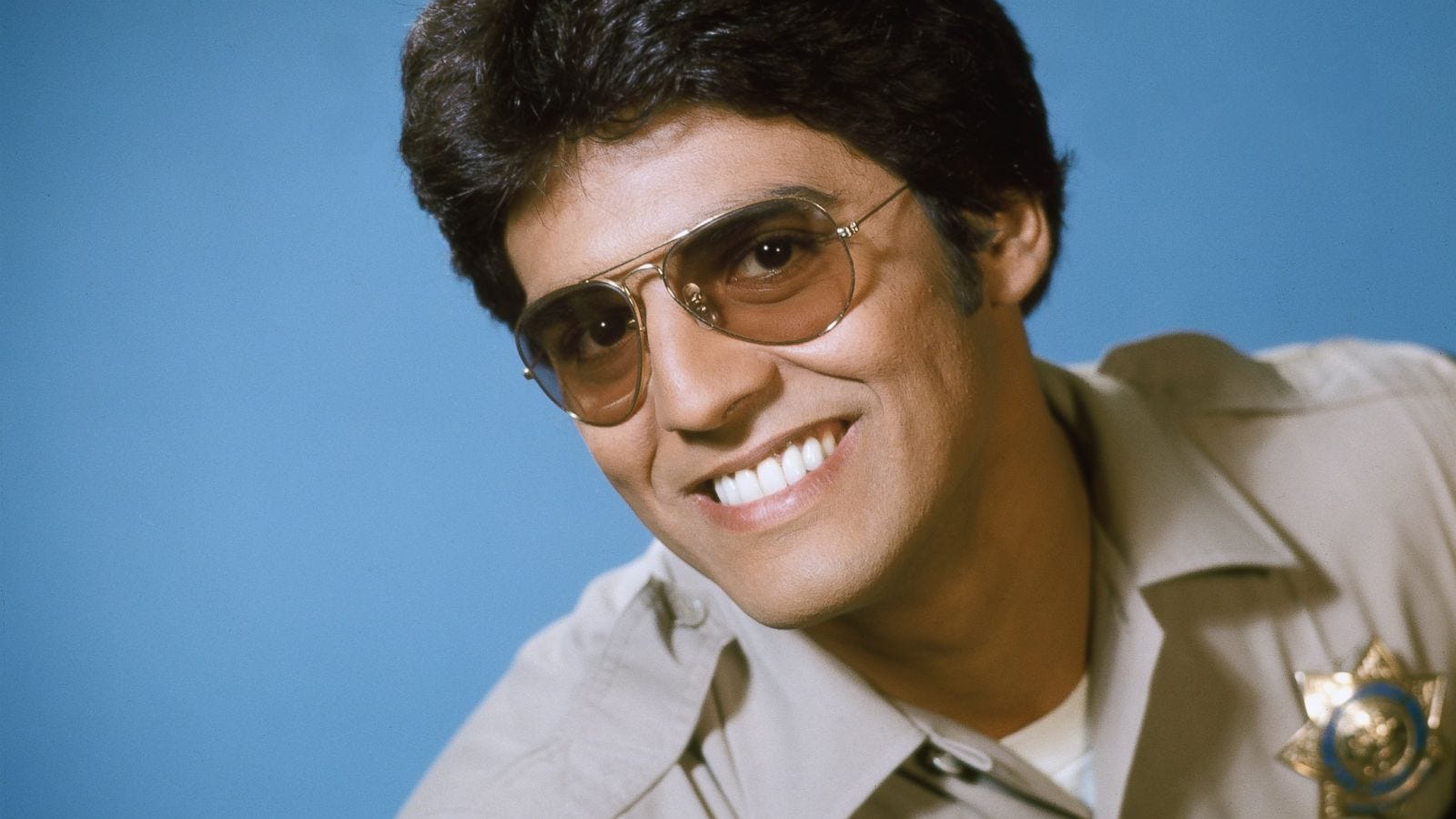
I really didn’t think they had the budget for Pamela Anderson. The next few things I’m going to say here are unabashedly racist. So if you are easily offended, I guess unsubscribe, don’t read, wait until my next post.
But. If you’re like, yeah, Steve, I’ll ride with you on this one:
The people whom I despised the most in Muncie, Indiana, were the rich white people because they never tipped. You’d walk the heated walkway to the ornate real oak door with the stained glass window panes, ring the chime, and some pimply kid came to the door, handed you exact change, and shut the door in your face. Or, the adults would ask for exact change back and shut the door in your face.
African Americans were the second racial group I despised the most, but this depended on the circumstances. If the dude had his girlfriend over, they’d tip okay. If the dude was single or just with his buddies or his girlfriend was his wife, there was never a tip.
The people I tripped over out the door for, the ones who I sped through the darkness of the night to bring to them their beloved pizza, Mexican immigrants. We are talking about a one-room apartment with ten to fifteen or more crammed inside and the tip. Oh, I worshiped at these people’s feet because the tip, at the very least, matched the ticket price, and sometimes they graced me with a 150% tip.
I found excuses not to take the runs that headed toward the wealthy or predominantly black neighborhoods. And I’d actively find ways to finagle the Mexican runs, even if it meant unfairly jumping the driver ahead of me in the queue.
The academic term for this behavior is opportunitistic racism. It was not intentional what I was doing; I didn’t differentiate people by skin color so much as by their broad patterns. I was focused on one thing—protecting my bottom line and making sure my wallet stayed fat. Nor am I now even proud of my past actions.
I bring the subject up now specifically because I want to point toward the Mexican immigrants and how many were crammed into that small 1 room apartment, and how that experience plays out against J.D. Vance’s recent comments about the housing shortage in the U.S.
Basically, the dude said the 30 gazillion immigrants crossing our southern border are what’s causing our housing shortage.
Anyone who has spent ten minutes with actual housing data knows the shortage began long before today’s immigration patterns and is driven by underbuilding, zoning, and financing constraints — not border crossings.
Blaming immigrants is emotionally potent, especially for the voter base he’s talking to.
By blaming immigrants, he risks nothing. Blaming zoning boards, developers, interest rates, or construction labor shortages, underbuilding in general, he’d by default implicate Republican legislatures, wealthy homeowners, and donor-class NIMBYs.
Additionally, this story positions himself within the Trump orbit, more about loyalty signaling than actual policy talk. And story is exactly what he’s aiming for—narrative before mechanism and reality, a push for what feels true to his audience.
Story continues after the book ad…
The Blueprint
Half blueprint, half confession. Irreverent. Caffeinated. Built to outlast hype.

☕A Coffee with Steve publication.

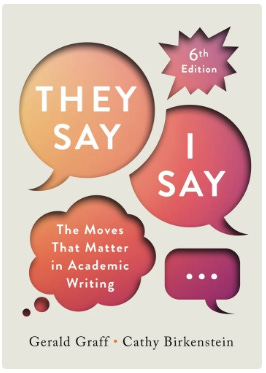
Gerald Graff, Emeritus Professor of English and Education at the University of Illinois at Chicago and 2008 President of the Modern Language Association of America, has had a major impact on teachers through such books as Professing Literature: An Institutional History, and Cathy Birkenstein is a lecturer in English at the University of Illinois at Chicago. She has published essays on writing in College English.
Order They Say/I Say at Bookshop.org
Bookshop.org works to connect readers with independent booksellers all over the world. Local bookstores are essential community hubs that foster culture, curiosity, and a love of reading, and Bookshop.org is committed to helping them thrive. Every purchase on the site financially supports independent bookstores.


We’ve talked before about narrative as the new economy. How to do it, why it’s happening, how we can cash in and control the narrative even:
When the very people who scream “Fake News” are themselves sreaming actual fake news, who is it that you are left to trust?
You know, I saw the particular address pop up on the driver’s delivery screen. I knew the town so well, I knew exactly which neighborhood that pie was headed. And suddenly, from out of nowhere, I had to go to the bathroom. The shop had thin walls, and I heard my manager ask where I heard teh manager ask where I had disappeared off to. The newer drive said I’d run off to take care of business.
“Well we don’t have the time for his crap, so I guess you’re up.”
Once the other driver was out the door, I returned, apologized for the disappearance, and out the door I went to the Mexicans. Except they were long gone
I’ve been playing catch-up this week from an impromptu trip to Ohio, and this past Wednesday, I missed our monthly all-company meeting at Keller Williams Coastal. Susan Kenyon snapped this photo and sent it to me:
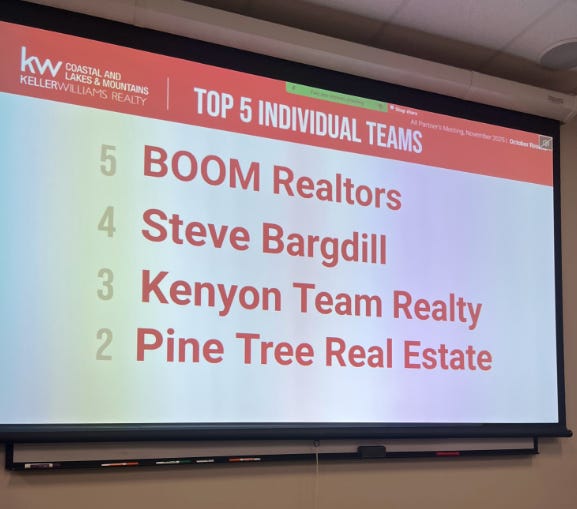
I really thought she was playing a prank on me. I certainly didn’t feel like I was in the top five of anything. The thing is, there are over 6000 licensed Realtors in the State of New Hampshire. I run pretty firmly in the middle of that pack. And ever since I’ve been in the real estate business, we’ve seen at any given time in the state a whole whopping 3000 or fewer single-family homes for sale.
In a time when we don’t know which story is actually telling the truth, even our trusted institutions have leaned into extreme narrative form to push specific political agendas, when you are ready to buy, sell, or invest in real estate, it’s vital you know exactly who is going to deliver that pizza every single dang time no matter what neighborhood you live in.
And it sure as hell isn’t the guy telling you immigrants broke the housing market. Nor is it necessarily the top five agents in the brokerage, the top ten in the local market, the most productive or the richest. But it’ll at least be someone who tells you the truth.

“Good writing is always about things that are important to you, things that are scary to you, things that eat you up.” – John Edgar Wideman
🌐 Explore more at stevebargdill.com
Coffee With Steve is free. If you enjoyed this post, you can tell Coffee With Steve that their writing is valuable by spreading the word and sharing with a friend.

☕Upcoming in Real Estate 101
Why Your Realtor Might Be In Over Their Head
The first in a full 10-part series that pulls back the curtain on an industry most people never get to see clearly. Beginning with the low barrier to entry that brings so many agents into real estate, the pieces walk readers through how those agents are actually educated, supervised, and licensed to represent the largest financial decisions of someone’s life. From there, the arc traces the full anatomy of a transaction—what a Realtor truly does, how agency law works in the real world, and why so much of the job has less to do with houses and more to do with marketing and navigating human behavior. The series also explains how agents are paid, how production numbers get misused, and how to read a Realtor’s online presence with a critical eye. The final installment gives consumers a practical set of interview questions so they can choose representation based on skill, clarity, and trust rather than chance or convenience.

About this publication.
Coffee with Steve is an independent publication by Steve Bargdill. Views are my own and do not represent Keller Williams Coastal & Lakes & Mountains Realty (“KWCLM”) or any other organization. Each Keller Williams Office is Independently Owned and Operated.
Not advice. Content is informational and educational; it is not legal, tax, or financial advice and does not guarantee results. Talk to a licensed professional who knows your situation before you act.
No agency created. Reading this does not create an agency relationship or agreement for services. Brokerage representation requires a separate written agreement with KWCLM.
Licensure. I am licensed in New Hampshire. Equal Housing Opportunity.
Wire-fraud warning. During representation by Keller Williams, you will never be asked via email to wire funds to anyone, including a title company. Do not follow email wiring instructions. Always verify by phone using a trusted number.
You can reach Keller Williams Coastal and Lakes & Mountains Realty at 603-610-8500 or Steve Bargdill directly at 603-617-6018.
Steve Bargdill | Realtor & Author | Seacoast NH | Licensed in NH as Stephen Bargdill Jr., with Keller Williams Coastal & Lakes & Mountains Realty.
Pronouns: he, they