If you are a conservative MAGA republican, this is your trigger warning.
I don’t know if you’re keeping up with the US news. I’ve been trying my best to avoid it. Though, what’s been coming out has been difficult to avoid. My wife, for instance, has been obsessed with the Epstein Files. We’ll be cuddled on the couch watching Wheel of Fortune, she’ll casually hand me her phone, and my response has become predictable: “Are you sure that’s true?” Because honestly, sometimes, I can’t tell the difference between what’s real and what’s imagined, and for someone who was rigorously trained in rhetoric, how to identify truth over gaslighting, how to teach others to distinguish good sources of information from absolute crap—if I’m having a hard time, I can’t imagine what’s going through anyone else’s head.
Earlier this month, Sarah Donovan wrote a piece for Foster’s about Dover High School students protesting ICE. The Dover protest was one of several throughout the Seacoast, including walkouts at Portsmouth and Oyster River. A few days before the protest, Aaron asked if I knew anything about the event, and I was like, “Nope, why you asking me?”
“Because,” and they said because in the way all teenagers do, with that deep eye roll and elongated e, “you seem to know everything that’s going on in town.” And that is normally true. A day later, parents received an email from Peter Driscoll reminding everyone about the school’s attendance policy: if your kid walked out for the thirty-minute protest and returned to class, they would need officially dismissed from school; if your kid did not return to school after the protest, they would need officially dismissed from school for the rest of the day. The night before the protest, Aaron asked if I could officially dismiss them from school.
“Sure,” I said. “What for?” I asked because I really had just plain forgotten about the protest. They rolled their eyes again.
I’ve dismissed Aaron from school for lesser stuff: they doomscrolled until 3:47 am and claimed that sleep is self-care; their outfit wasn’t right—not that they didn’t have clean clothes, but more like the clothing vibe was somehow just off; they had a pimple; they were suffering a social drought; there was drama; they were the drama; they wanted to binge Jujutsu Kaisen, One Punch Man, Toradora!, Ranma ½; or sometimes, it was just a flipping hair catastrophe. If they didn’t have a 4.9256 GPA, I’d be concerned, you know?

As of yesterday, over a 1000 immigration agents have (finally) left the Minneapolis-St. Paul area, with supposedly more to follow. Though Border Czar Tom Homan said a smaller protective/security presence will remain temporarily—except he never defined what small actually meant or how long temporarily really was. The drawdown comes after fatal shootings of two U.S. citizens during enforcement actions, which only served to intensify on-the-ground protests. This hasn’t been one single “kind” of protest. Minnesota has been a stack of tactics. January 23 framed as a “no work, no school, no shopping: day, an economic blackout with a downtown march as visible crest. Iglesia Dios Habla Hoy, a South Minneapolis church, delivered 12,000 boxes of groceries in about six weeks to families in hiding, with 20,000+ families registered for food support—a verifiable pop-up supply line, a battalion of volunteers and vans.
The Blueprint
Half blueprint, half confession. Irreverent. Caffeinated. Built to outlast hype.

☕A Coffee with Steve publication.

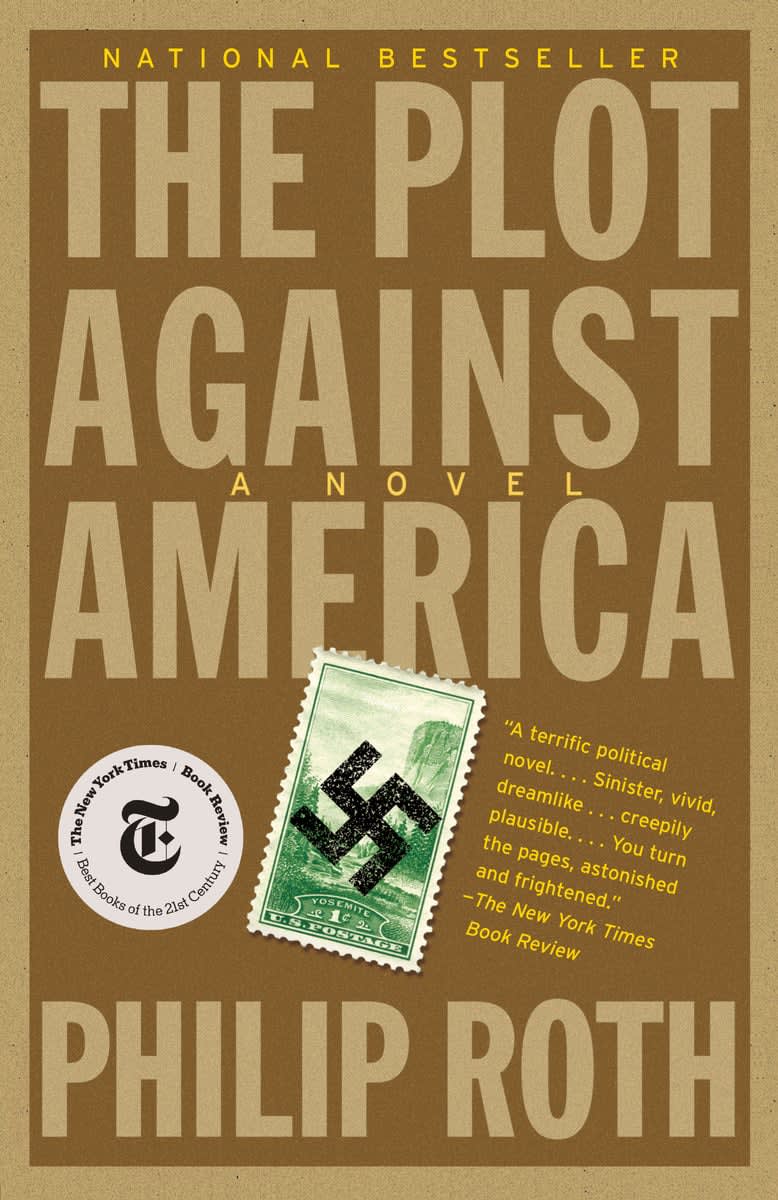
The chilling bestselling alternate history novel of what happens to one family when America elects a charismatic, isolationist president whose government embraces anti-Semitism—from the Pulitzer Prize–winning author of American Pastoral.
In an extraordinary feat of narrative invention, Philip Roth imagines an alternate history where Franklin D. Roosevelt loses the 1940 presidential election to heroic aviator and rabid isolationist Charles A. Lindbergh. Shortly thereafter, Lindbergh negotiates a cordial “understanding” with Adolf Hitler, while the new government embarks on a program of folksy anti-Semitism.
Order The Plot Against America at Bookshop.org
Bookshop.org works to connect readers with independent booksellers all over the world. Local bookstores are essential community hubs that foster culture, curiosity, and a love of reading, and Bookshop.org is committed to helping them thrive. Every purchase on the site financially supports independent bookstores


Thousands carried and still carry whistles into the streets to warn people who are vulnerable, to pull witnesses into view (phones out, eyes on). People post guard around likely ICE routes; when someone spots federal vehicles, whistles pop and people start filming—akin to the women of Belfast banging on metal bin lids to warn the neighborhood that soldiers and police were moving in for a raid, giving others a moment to hide people, hide items, or get kids inside. 250 demonstrations across 46 states, and sit-in activists rose across the nation in more than two dozen Minneapolis-based Target stores—from our own Boston to the far shore of Honolulu—turning ordinary aisles into a public demand for justice. Courts have ruled thousands of times that ICE imprisoned people illegally. That pattern has not stopped since the fugitive slave patrols. The American Immigration Council reports a sharp increase in detention footprint and daily detainee counts, plus a big shift toward more “at-large” community arrests. The American Civil Liberties Union says new legal filings describe intimidation and violence and rights violations. The filings describe US citizens being stopped and detained, asked for documents such as passports, IDs, green cards, but when produced dismissed or left unexamined. One of the publicized patrol photos out of Minneapolis is literally an arrest after someone couldn’t produce documents proving citizenship. And yet, under the guise of immigration enforcement, ICE continues to build its own digital database, much like how the 1920s Red Scare provided Hoover cover to build a card-catalogue index of suspected communist sympathizers, an analog database which helped power the Palmer Raids.
The Guardian also reported yesterday that Ofelia Torres, a sixteen-year-old Chicago teen, not much younger than my kid, fought for her father’s release from ICE custody during a named operation, and later died of cancer—just one example that is the driving force of public outrage.
ICE has outpaced accountability.
February 6th, I called the school. I officially dismissed the kid. When Aaron arrived home, they were beyond hyped.
The flagpole outside Dover High School turned into a winter-morning-bright pressure valve. Kids slipped out of class in clumps, then waves. Hoods up, cheeks raw from cold and signs. A bullhorn cuts through the chants. Harper Bairstow, the senior organizer, names the point of the protest without flinching: affirming dignity, refusing ICE’s barbaric tactics. Other students follow, talking racial profiling, due process, families getting ripped open. Someone holds up a jug of literal ice melt—dark humor turned weaponized metaphor.
Most students return to class. A group of forty do not. They instead marched toward 288 Central Avenue, Dover City Hall. Except most of them don’t know the way. And there’s concern about traffic and safety. Aaron knew the way. So they led the march. They stationed a watcher in the middle and a watcher at the back. People in cars flip them off. Some yelled at them, telling them to go back to school. Others honked in support. After, the teens were hungry and visited La Festa Brick and Brew for pizza. Someone didn’t know how to get home, and Aaron walked her home to make sure she was safe.
The following day, I picked Aaron up from school, and they were disgruntled. “I have detention,” they said.
I haven’t heard that word in so long. My mind jumped to my own high school days. People think I’m cool now, but back then, I got picked on, called a nerd, bullied. Chris, in particular, wanted to foot race me behind the gas station next to the school. I kept saying no, but he pressured so much that I relented. The day of, Chad and Matt told me it’s not a foot race. Chris is going to tackle me and beat me up.
“Why?”
They shrugged.
We went to the principal’s office. Mrs. Kuck said they couldn’t do anything about the situation because the moment was going to happen off campus, and the school had no authority off-school grounds. I called my dad. He didn’t believe me, told me I just wanted an excuse not to walk the seven blocks home. Chad and Matt trailed behind me to the gas station. They were both as thin as I was. They didn’t know what else to do except stand there and watch as Chris grabbed a hold of my ankles and swung me around like a carnival Waveswinger. That was me as a teenager, almost every day. Hell, my best friend drop-kicked me half-naked in the locker room shower after gym class just cause.
One time, at lunch, John started name-calling me. Name after name: Rest stop toilet seat licker, porta-potty rim job enthusiast, dollar store reject, back-alley abortion survivor. I think John is a pastor now, actually. I threw my salad at him because that’s what I had left on my tray. A few weeks later, Patrick did the same. I poured my chocolate milk into his lap. Patrick jumped from his seat. His cheeks hot red. He was breathing hard. His hands balled into fists. I popped him in the nose before he could make a move. I wasn’t thinking. I don’t even remember being in that moment so much as I felt as if I were outside my body, watching myself get into a fistfight in the middle of the lunchroom. I think I was maybe seventeen—the same age as Aaron now. Mr. Rowan, the ex-cop sociology teacher, pulled me out of there. Mr. Rowan said that Patrick could have literally killed me because he was from the bad city streets of New York.
Mrs. Kuck forced me to eat lunch in the school administrative office, facing a blank wall, and told me not to speak. The teachers, the staff, students, anyone in the office were not allowed to speak to me either. I tried to have conversations, but I was ignored. And people talked around me. Three weeks of this lunch-time solitary confinement, and I begged for a detention.
“Are you sure?” Mrs. Kuck said. “A detention will go on your permanent record.”
“You might not be able to apply for college if it goes on your permanent record,” Mr. Rowan said. The fluorescent light made his bald head shinier than normal.
“We’d have to call your parents,” Mrs. Kuck said.
“Permanent record,” Mr. Rowan repeated.
I asked Aaron how they got detention.
“Mr. Driscoll pulled me out of class and said I was getting a detention for the protest.”
“I called you out for the day.”
“I know. I don’t care,” they said.
I was proud. Scratch that—not proud—ecstatically proud. This kid, with no prompting, ready to take the punishment for a protest.
As of December 1964, the Free Speech Movement at the University of California, Berkeley had already blown past the polite-fiction phase and into consequences. Jack Weinberg got arrested for setting up a table to hand out leaflets and solicit support for civil-rights groups and direct-action campaigns—rides, pickets, boycotts, fundraising, volunteer sign-ups. The university acted like it was just enforcing rules, like this was administrative housekeeping. Police tried to drive him off campus, and hundreds—then thousands—surrounded the police car and trapped cruiser for more than a day, a steel box turned into a podium, a rolling town hall, speeches launched from the roof while the authorities insisted this was temporary, all controlled, all reasonable.
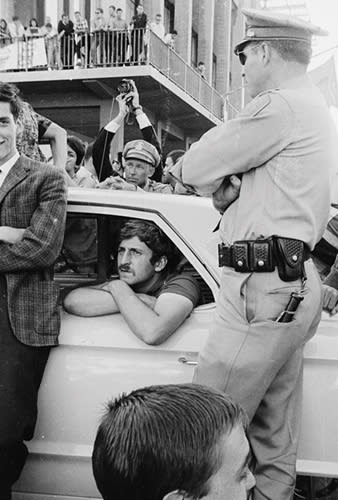
Except nobody could define reasonable. And this wasn’t one single kind of protest. Berkeley became a stack of tactics: bodies in the plaza, microphones and leaflets, sit-ins and fine, arrest us then resolve; and when the university tried to choke the movement with suspensions and threats, students responded by escalating into Sproul Hall—an occupation with a dare: remove us. Police hauled out close to eight hundred people, the largest mass arrest in California history. And the DNA of that choice didn’t belong only to Berkeley. Diane Nash down in Nashville modeled jail, no bail—refusing to pay her way out. A few years later that same willingness scaled to spectacle: the March on the Pentagon, tens of thousands in the street, soldiers, tear gas, bodies pressed against power, and roughly 682 arrests—people volunteering for punishment as proof.
Aaron wasn’t upset about the detention. They were upset about the vagueness of the logistics around the detention. What day? What time? How were they going to get home? Were they going to walk? Was there a bus? Did Dad have to come by with the car. I sent an email:
Mr. Driscoll,
Quick question—my kid came home today with the world’s vaguest intel that they might have a detention later this week connected to last week’s ICE protest.
I’m pretty sure there was a miscommunication though, because I did call in Aaron’s dismissal for the full day exactly as the emails instructed. But if detention is still being assigned, I’m fine with them serving—but if scheduled this week, I can’t guarantee transportation home afterward. Given the cold temperatures, I’m not comfortable having them walk home, especially since they’re on a bus route. Next week would be much easier on my schedule—and since we are “punishing” them and not me can you please confirm date and time for next week?
Aaron does not have detention anymore. Honestly, I’m disappointed by that.
Aaron was ready to take the hit—courage I didn’t have to coach them into. But when the detention disappeared, it’s like the world said, “Welp, nevermind.” If Aaron breaks a rule for something stupid, like staying in bed all day because of a bad hair day and a Ranma One Punch Man binge marathon, consequences teach nothing. But if Aaron broke a rule for something righteous, something just, something sacred then consequences teach a willingness to pay the price of witness.
By July 3, 1970, the Lower Falls in Belfast, Ireland a weapons search ignited into clashes, and the British Army wrapped tight around ordinary kitchens and back stairs. The military dumped CS gas into streets, a hard curfew was enforced that ran for roughly thirty-four hours, and door-to-door searches across something like three thousand homes—an entire district treated like a single suspect body. This wasn’t one single kind of control. It was a choreography: checkpoints, batons, rifles, radios, boots on landings, soldiers in living rooms, women leaning out windows to count the passes, kids pulled inside by wrists, and the sickening logic of temporary that never came with a definition. Four civilians end up dead, dozens wounded, and 337 arrested. In Belfast, the excuse was security. In Minnesota the vocabulary is enforcement: a surge of agents, volatile street-level encounters, intimidation claims.
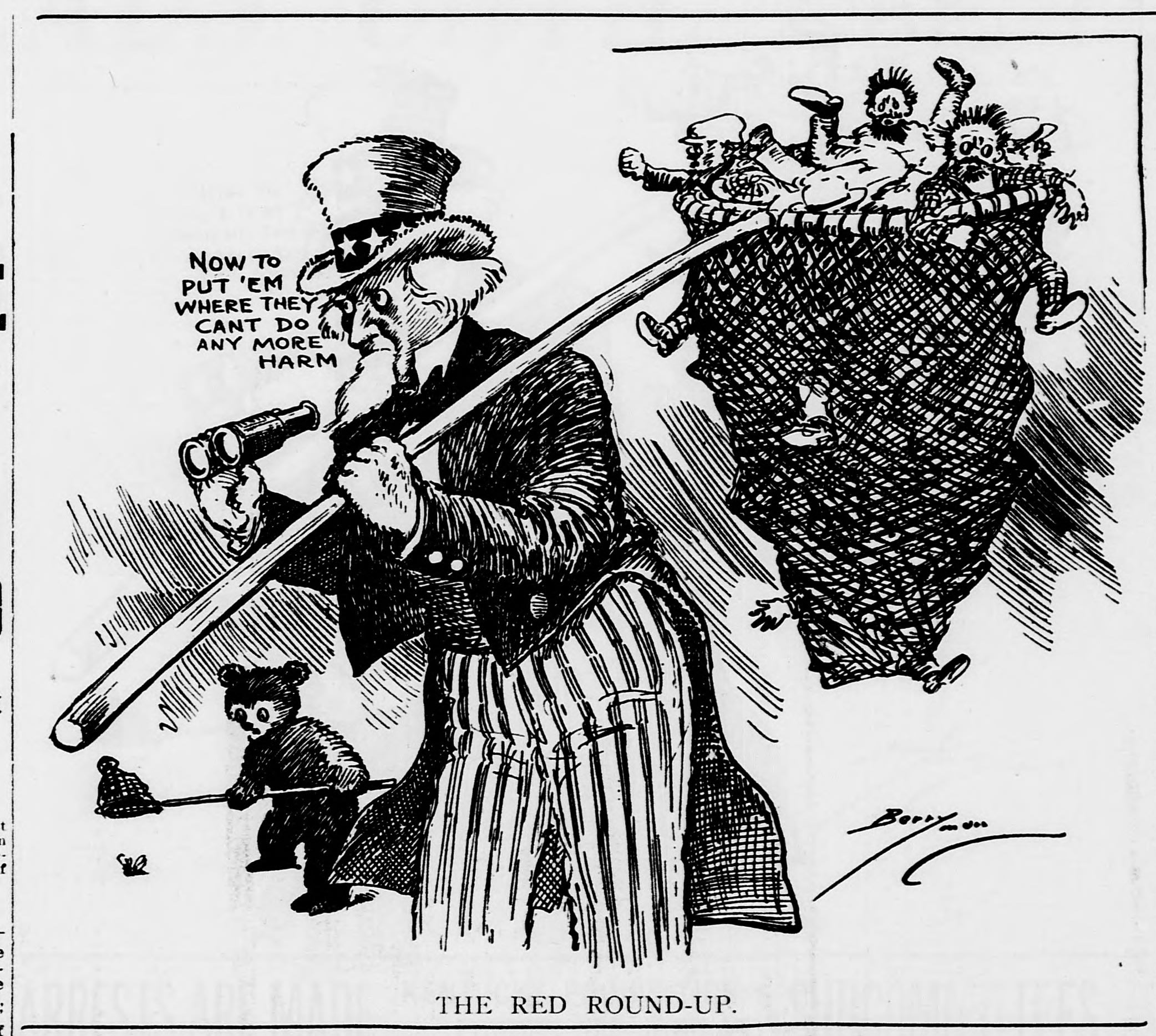
The Palmer Raids were the United States doing what panicked empires do when they decide dissent is a pathogen: they don’t debate you, they catalog you, then they kick your door in. In 1919 the United States was jittery—war just ended, strikes everywhere, the Russian Revolution haunted the headlines, a mail-bomb campaign made politicians wet their suits—and A. Mitchell Palmer decided to turn fear into a machine: a propaganda drumbeat (“reds,” “aliens,” “subversives”), a bureaucracy of lists, informants, membership rolls, seized pamphlets, and then the practical violence of enforcement—agents hitting union halls and meeting spaces, grabbing people in night sweeps, jamming them into makeshift detention, questioning them without counsel, holding them on thin paper, sometimes no paper, because the point wasn’t a trial so much as a warning flare. The November 1919 round hit multiple cities; the January 2, 1920 dragnet sprawled wider—thousands arrested across the country. The Bureau of Investigation men (proto-FBI, still wet cement) call it procedure and security. A young J. Edgar Hoover was already in the back room building the index cards of suspicion. Deportation became clean-looking—Emma Goldman and Alexander Berkman shipped out with others in December 1919 on the Soviet Ark, exiled as if citizenship were a privilege. Reports of beatings, illegal detentions, warrantless raids.
Palmer had lists and informants and seized pamphlets; ICE has databases, plate scans, at-large arrests, roving patrol logic, check-in traps, detention expansion—an infrastructure designed to grab people in public life: teachers, nurses, students.
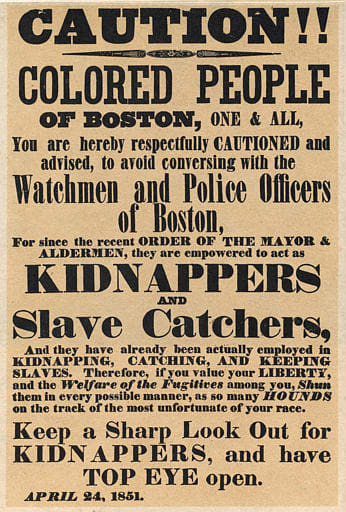
In plantation corridors from South Carolina up through Virginia, fugitive slave patrols ran the roads and the tree lines—white men deputized into a roaming permit office—stopping black bodies, demanding papers. Patrols broke up meetings, searched quarters, confiscated books, weapons, food, tools. Punished on the spot. And when property fled, patrol escalated into manhunt. Runaway ads turned the newspaper into a catalog of scars, dialects, and guessed-at destinations; bounty language turned violence into commerce. The net spread north too—free Black people swallowed into the same maw because the difference between free and enslaved was paperwork and the mood of the man holding the gun. The government required citizens to assist, punishing refusal, and building a fee-and-fine architecture. Every road a checkpoint, every knock a threat. Every footstep after dark a potential crime.
The Fugitive Slave Act of 1850 drafted the public into enforcement—aid and assist, punished refusal, paid officials more to return a person than to release them. The ICE-era money machine leans in with recruitment packages that promises big signing bonuses, student-loan repayment, incentives that reward detention throughput, and cash bonuses for swift deportations.
The first Epstein file photo I saw was Trump unbuckling Clinton’s pants. Except the photo is absolutely fake. Sure, the two men were photographed often together in the files, but other Trump/Clinton montage photos are also so much fake news. The new one, my wife showed me while we watched Wheel of Fortune, was the baby teeth turned into the sole of a pink shoe, which alleged Epstein removed the teeth of his victims so they couldn’t bite back. The only true thing about that image is the dentist’s chair. What we know is that there are a lot of victims and a lot of powerful people gaslighting us about truth.
And the one other thing I know: Aaron, my kid, hand in my hand, is the one leading me home.

“Good writing is always about things that are important to you, things that are scary to you, things that eat you up.” – John Edgar Wideman
🌐 Explore more at stevebargdill.com
Coffee With Steve is free. If you enjoyed this post, you can tell Coffee With Steve that their writing is valuable by spreading the word and sharing with a friend.
☕In Real Estate 101
Why Your Realtor Might Be In Over Their Head
The first in a full 10-part series that pulls back the curtain on an industry most people never get to see clearly. Beginning with the low barrier to entry that brings so many agents into real estate, the pieces walk readers through how those agents are actually educated, supervised, and licensed to represent the largest financial decisions of someone’s life. From there, the arc traces the full anatomy of a transaction—what a Realtor truly does, how agency law works in the real world, and why so much of the job has less to do with houses and more to do with marketing and navigating human behavior. The series also explains how agents are paid, how production numbers get misused, and how to read a Realtor’s online presence with a critical eye. The final installment gives consumers a practical set of interview questions so they can choose representation based on skill, clarity, and trust rather than chance or convenience.
About this publication.
Coffee with Steve is an independent publication by Steve Bargdill. Views are my own and do not represent Keller Williams Coastal & Lakes & Mountains Realty (“KWCLM”) or any other organization. Each Keller Williams Office is Independently Owned and Operated.
Not advice. Content is informational and educational; it is not legal, tax, or financial advice and does not guarantee results. Talk to a licensed professional who knows your situation before you act.
No agency created. Reading this does not create an agency relationship or agreement for services. Brokerage representation requires a separate written agreement with KWCLM.
Licensure. I am licensed in New Hampshire. Equal Housing Opportunity.
Wire-fraud warning. During representation by Keller Williams, you will never be asked via email to wire funds to anyone, including a title company. Do not follow email wiring instructions. Always verify by phone using a trusted number.
You can reach Keller Williams Coastal and Lakes & Mountains Realty at 603-610-8500 or Steve Bargdill directly at 603-617-6018.
Steve Bargdill | Realtor & Author | Dover • Portsmouth • Somersworth • Rochester • Seacoast NH | Licensed in NH as Stephen Bargdill Jr., with Keller Williams Coastal & Lakes & Mountains Realty.
Pronouns: he, they