For legal reasons, I’m required to state upfront that this is satire. Johnathan Swift ruined it all for us first.
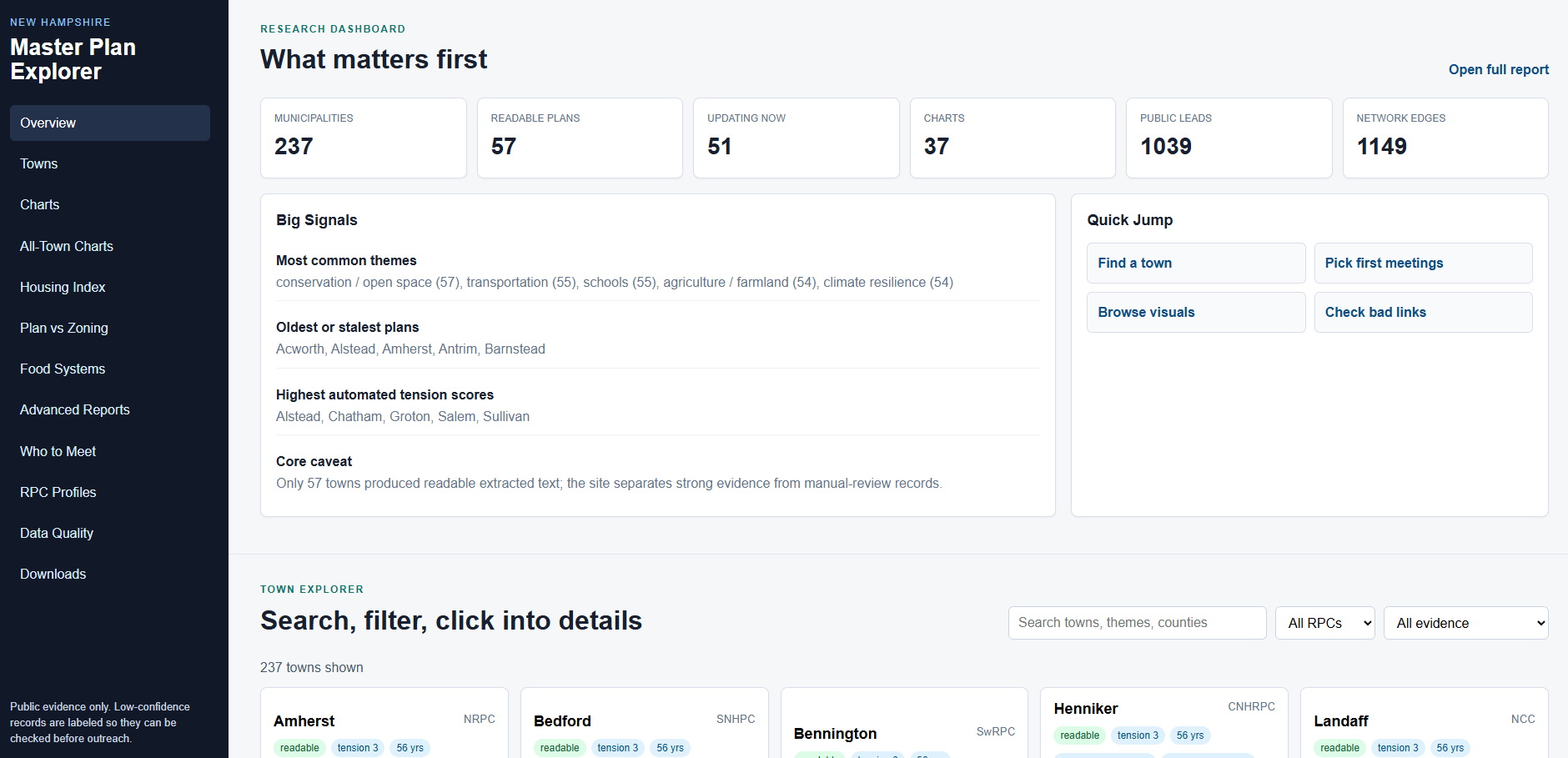
Yesterday, I started a small project, mapping all 234 New Hampshire municipality master plans and cross-referencing with actual zoning regulations. I’m about halfway through gathering the data, but one thing is absolutely clear already: too many people in Dover are procreating, and I have solved Dover’s housing crisis. Basically, we need to stop having sex, or at least less sex. Not abstinence forever. I am not unreasonable—because this is not Portsmouth we are talking about here.
Over the past twelve months, Dover has seen 174 single-family homes go up for sale and then quickly purchased. That math works out to not even half a house per day for a city that needs 1,952 more housing units over the next five years (Housing Forecast). And 1,952 new units only fix our current need.
More than one-third of Dover is between 20 and 39, and those are prime baby-making years. Worse still, the city is burdened with 5,815 juice-box-armed children roaming free on the streets with sticky hands, swarming the city on bicycles and scooters at unregulated sidewalk velocities.
As of this writing, we have a whopping total of 31 single-family homes for sale in Dover. 13 of those are maybe affordable with a median list price of $675,999. A home buyer needs to earn roughly $166,000 a year to afford the median-priced home.
Which doesn’t really sound like a lot of money?
Except once you add in child care costs, add a single infant to the equation, and the household needs an annual income of about $200,000. Dover’s median family income sits at $134,781. Underwater before the offer is even written.
Then. Eleven Dover homes sit in the $1M to $2M range, four more sit between $2M and $3M. Two more are above $3M, 74 Saddle Trail Drive at a whole $4,500,000, which requires $1.14M in annual income once childcare is included.
Dover, by the way, does have one home selling for $490,000, but that eggshell paint weekend refresh has been on the market off and on for more than a year, chewed through several real estate agents, and asks buyers to ignore the digitally hallucinated hardwood floors while pashaing away the 25-year-old septic leach field, the 30-year-old heating system, the 100-amp electric box, the no idea about insulation or radon, and where the hell is the air conditioning.
The good news, probably, and according to FRED’s last year’s data, is that Dover’s rental market has evened out to a nice 4%, which is considerable since a few years ago our rental vacancy rate hovered around .001%.
But for a family of four, the real rental question is, “Are there two-bedroom rentals available?” Dover has about 3,332 occupied two-bedroom units, and Zillow (accessed June 2, 2026) shows only 97 two-bedroom apartment rentals available. That is a rough live-market vacancy estimate of about 2.8%. Well below the 5% vacancy rate considered balanced.

So.
My official proposal to the planning board: since Dover does not have enough housing, Dover should reduce the behaviors that create household demand. This would be accomplished through various land-use and public health interventions, local ordinances, incentive programs, and municipal policy interventions—the first of which would be the Dover Chastity Belt Exchange.
Responsible citizens may, of their own free will and volition, and without penalty, surrender to the police department fireworks, leaf and/or snow blowers, unused kayaks, or strong opinions about parking minimums and receive in return a chastity belt. Police shall hold the key in an evidence locker until housing inventory rises above a humane threshold.
In addition to the Dover Civic Chastity Initiative, the city should explore a Voluntary Vasectomy Voucher Program for residents who wish to reduce future housing demand at the source. Dover could partner with local healthcare providers, perhaps funded through impact fees, tax increment financing districts, or the sale of commemorative “I Did My Part for Housing Affordability” tote bags and T-shirts.
Perhaps the bigger problem is that Dover seems pro-children.
Dover School District serves about 4,200 students with about 600 employees, with three elementary schools, a middle school, and Dover High School/Career Technical Center serving Dover, plus students from Nottingham and Barrington. The district describes its curriculum work as focused on rigorous, joyful, culturally responsive learning with social, emotional, and academic supports. And for younger kids, Dover has an integrated district preschool program for children with and without disabilities, aimed at developmental growth and inclusion.
The Children’s Museum of New Hampshire offers hands-on exhibits and programming for kids, with regular science, art, and cultural activities. Behind the Children’s Museum is Dover Adventure Playground, with free public access to swings, slides, a full-size gundalow boat, and a splash pad.
Dover’s Recreation Department runs programming and facilities through the McConnell Center, Dover Indoor Pool, Jenny Thompson Outdoor Pool, Dover Ice Arena, and various parks and outdoor facilities around the city. The Dover Community Trail follows a former railroad bed and provides access to greenways along the Cochecho and Bellamy Rivers. The in-town section connects downtown, the Transportation Center, Dover Middle and High School, and Bellamy Park in a pedestrian- and bike-friendly way. That gives families options across seasons: swimming, skating, youth programs, camps, outdoor play, and structured activities when the children begin ricocheting off drywall.
Dover Public Library has kids’ programming, teen resources, family resources, StoryWalk, reading recommendations, and children’s events. The Cochecho Arts Festival brings music and art into Henry Law Park, including summer programming and Tuesday morning children’s shows. 2026 is the annual festival’s 40th event.
Community Action Partnership of Strafford County is based in Dover and works to reduce barriers for residents through education, advocacy, partnerships, and economic stability support. Its Family Resource Center has offices in Dover and Rochester, with community outreach and playgroups across Strafford County.
Downtown gives parents an actual life, too. Not a fake lifestyle center downtown. Not “here is a Chipotle next to a bank and a chiropractor.” Actual old buildings. Coffee shops. Restaurants. The train station. The river. The mills. Sidewalks. Things to do. People walking around as if civilization has not already been dragged behind a strip mall, clubbed with a traffic cone, hog-tied, thrown into the trunk of a leased SUV, and DoorDashed UberEats delivered to the great black altar of the municipal asphalt gods, and then, finally, sacrificed to not enough surface parking.
Of course, mobile/manufactured homes and condos are often considered good starting points on the path to home ownership. However, currently Dover only has a single mobile/manufactured home for sale. The most affordable two-bedroom condo, 30 South Pine Street lists for $314,900. After that, we jump immediately to $399,900, then right into the $500k+ condos. Three condos are a million plus. 33 Little Bay Drive, $2,495,000. This is affordability twirling a Snidely Whiplash fake mustache.

The good news is that Dover has a lot of approved/proposed/amended/under construction technically alive but shambling through municipal fog like a stitched-together zoning corpse that escaped the Planning Board lab, dragging site-plan admended amendments, expired permits, dead site plans, half-poured foundations full of rainwater, orphaned variances, soggy impact studies, the tortured screams of a thousand public-comment periods, and one suspiciously blinking traffic study behind it. The city is likely adding roughly 1,000+ units within the near-term pipeline, with a plausible five-year upside of 1,250+ if Liberty Mutual’s later phases and smaller approved TDR projects materialize.
Liberty Mutual’s first phase alone is 245 apartments, with the larger campus plan floating around up to 400 units. The Waterfront is 418 units. The McIntosh West Apartments are pushing 78 units late this summer. 47 Chestnut is an approved/future multifamily redevelopment. Copley Commons, Emerson Ridge at Janetos Farm, Cattages at Back River Road, the 52 Old Rochester Road TDR project, to name a few.
Except, even after one of these units materializes, the pipeline does not clearly solve the family-sized affordability problem.
Using the standard 30% affordability rule, a household making the median annual income can afford a $2,300 studio. A $2,800 one-bedroom works. A $3,000 two-bedroom works. Barely. But once a two-bedroom creeps above $3,370, we start talking about family housing the way a Tesla Cybertruck is technically a truck: if you squint, lie to yourself, ignore the missing bed space, the weird angles, the price tag, the lifestyle cosplay, useless the second you introduce three children and look at the thing and say, “Yes, finally a practical solution to hauling children, dogs, groceries, laundry baskets, wet boots, snowpants, lunch boxes, emotional damage, childcare costs, and a secondhand couch from Facebook Markeplace that does not arrive by venture capital injection.”
Other potential anti-sex programs the city could institute:
-
The Romance Impact Fee
Any couple seen holding hands downtown after 8 p.m. must contribute to an Affordable Housing Trust Fund. -
The Anti-Cuddle Overlay District
For neighborhoods where residents fear that affection may alter community character. -
Conditional Use Permit for Conception
Applicants must demonstrate adequate bedroom capacity, childcare availability, and no adverse impact on neighborhood character. -
The Romantic Density Cap
No more than 2.3 crushes per acre, unless the applicant provides workforce housing or a really convincing charcuterie board. -
Residents may anonymously report suspicious sofa proximity, repeated blanket-sharing, or music by Sade played after municipal quiet hours.
-
The Workforce Abstinence Incentive Program
Households earning below the area median income receive tax credits for every year they successfully resist candles, wine, Marvin Gaye, and eye contact lasting longer than four seconds.

In the master plan data I’m working through, Dover lands in the “Half-Means It” category on affordable housing sincerity. Dover has the vocabulary: workforce housing, senior housing, downtown revitalization, walkability, equity, inclusion, mixed-use, ADUs, public engagement. The city speaks fluent housing concern.
According to the zoning data, 62.1% of buildable acres allow three-or-more-family housing either by right or conditionally, and 81.2% allow ADUs by right or conditionally.
Which sounds good until you hit the word conditionally, and you get a whole new vocabulary list: public hearing, site plan review, parking requirements, dimensional standards, neighborhood concern, character, traffic, drainage, and someone named Doug in a fleece vest asking whether children will make noise near his investment property.
But Dover is not an anti-growth backwater muttering about stone walls and cow ghosts. Dover is a contradictory town. Dover wants to be a dense, walkable, mixed-use, family-friendly small city while still talking about itself with one hand clutching a rural preservation rosary.
Dover’s problem is not just Dover’s problem. Dover is just a single chapter in a New Hampshire-wide planning contradiction: towns want the social benefits of young families while zoning for the housing preferences of incumbent property owners.
Across the master plans and zoning laws, and again, I’ve only been through half the data thus far, but a clear pattern has already begun to emerge: New Hampshire towns want young families the way people want heirloom tomatoes in February: aesthetically, morally, nostalgically. Towns want the symbolism, while the zoning preserves a land-use pattern that makes it financially impossible for those families. But without the buildable policies and conditions that produce great gardening results, we can’t keep having all the sex because more sex means more babies and more babies mean more families, and although we are not short on family values, we are short on family-sized, family-affordable homes.
☕The Real Estate 101 Series
The Top Four Mortgage Types


About this publication.
Coffee with Steve is an independent publication by Steve Bargdill. Views are my own and do not represent Keller Williams Coastal & Lakes & Mountains Realty (“KWCLM”) or any other organization. Each Keller Williams Office is Independently Owned and Operated.
Not advice. Content is informational and educational; it is not legal, tax, or financial advice and does not guarantee results. Talk to a licensed professional who knows your situation before you act.
No agency created. Reading this does not create an agency relationship or agreement for services. Brokerage representation requires a separate written agreement with KWCLM.
Licensure. I am licensed in New Hampshire. Equal Housing Opportunity.
Wire-fraud warning. During representation by Keller Williams, you will never be asked via email to wire funds to anyone, including a title company. Do not follow email wiring instructions. Always verify by phone using a trusted number.
You can reach Keller Williams Coastal and Lakes & Mountains Realty at 603-610-8500 or Steve Bargdill directly at 603-617-6018.
Steve Bargdill | Realtor & Author | Seacoast NH | Licensed in NH as Stephen Bargdill Jr., with Keller Williams Coastal & Lakes & Mountains Realty.
Pronouns: he, they